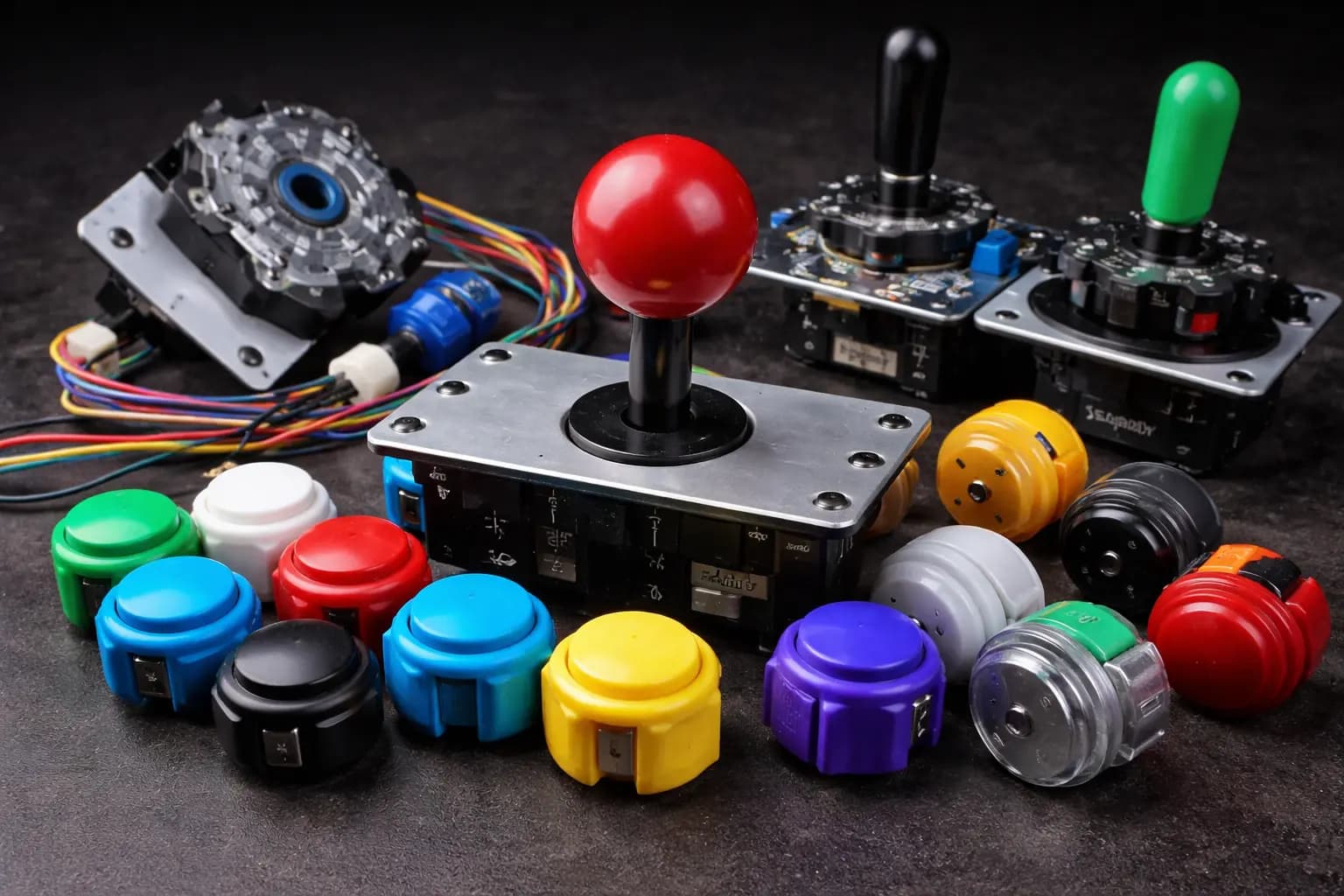
Arcade Stick Parts UK: Complete Buyer’s Guide for Beginners
ArcadeStickLabs
21 January 2026
Ultimate Guide to Arcade Stick Parts UK (Joystick, Buttons, PCB & More)
If you are building, repairing, or upgrading a fightstick, buying arcade stick parts in the UK can get confusing fast.
You start looking for a new lever or buttons, then suddenly you are comparing:
- Sanwa
- Seimitsu
- Crown
- Brook PCBs
- 24mm vs 30mm buttons
- Japanese vs Korean levers
- different cases and wiring setups
It is a lot when you are new.
This guide keeps it simple. The goal is to help you understand what each part does, what usually matters most, and how to avoid buying parts that do not fit your build.
What parts make up a fightstick?
A typical arcade stick is made up of a few core parts:
- Lever / joystick – used for movement
- Buttons – used for attack inputs
- Top – the part your hand grips, such as a ball top or bat top
- PCB / encoder – the board that handles input and platform support
- Wiring – connects the buttons and lever to the PCB
- Case / enclosure – the shell that holds everything together
The good thing is that most of these parts can be swapped or upgraded later.
That is a big part of why arcade sticks are still popular.
Which arcade stick part matters most?
If you are new, the two parts that usually make the biggest difference are:
- the lever
- the buttons
Those are the parts you actually feel every time you play.
For most people, that is where it makes the most sense to start.
1) Levers (joysticks)
The lever changes how movement feels more than almost anything else.
This is usually the first part people focus on, especially if they are moving from pad to stick.
Japanese levers
Japanese levers are the most common starting point.
They usually feel:
- lighter
- smoother
- easier to get used to for beginners
The two names you will see most are Sanwa and Seimitsu.
Sanwa JLF / JLX
The Sanwa JLF is one of the most common arcade levers in the world.
It is used in many retail fightsticks, and for a lot of players it is the default starting point.
Why people choose it:
- smooth movement
- light tension
- easy to find parts for
- fits many common cases
If you are not sure what lever to start with, Sanwa is usually the safest option.
Seimitsu LS-32 / LS-56
Seimitsu levers are still Japanese levers, but they usually feel:
- firmer
- shorter in throw
- a bit more deliberate
A lot of players like Seimitsu when Sanwa feels too loose.
They are a good option if you want a tighter Japanese-style feel without jumping straight to a Korean lever.
Korean levers
Korean levers are especially popular with Tekken players.
They usually feel:
- tighter
- snappier
- faster returning to neutral
That is why they get recommended so often for movement-heavy games.
The main thing to understand is that Korean levers do not feel like Sanwa or Seimitsu. The tension and motion are noticeably different.
Crown 309MJ
The Crown 309MJ is one of the most popular Korean levers.
It is a common choice for Tekken players who want stronger tension and a faster return to neutral.
👉 View the Crown CWL-309MJ Plus
It makes the most sense if:
- you mainly play Tekken
- you want a tighter lever feel
- you already know you prefer Korean-style movement
Sanjuks V7
The Sanjuks V7 is another Korean lever that gets a lot of attention from players who want a more premium build.
It is usually more relevant to enthusiasts than complete beginners, but it is worth knowing about if you plan to build a higher-end setup later.
2) Buttons
For a lot of players, changing the buttons is one of the quickest and cheapest ways to change how a stick feels.
Buttons can feel:
- lighter
- firmer
- quieter
- more tactile
That is why people care so much about them.
Sanwa OBSF
The Sanwa OBSF-30 is still one of the safest button choices for beginners.
Why people start with Sanwa:
- light press
- consistent feel
- common in arcade setups
- easy to install in many builds
If you do not know what buttons to buy yet, this is usually the easy starting point.
Crown 202
The Crown 202 is a popular option for people who want something more tactile or more mechanical-feeling than Sanwa.
👉 View the Crown 202 SDB 30mm Cherry
Players often choose Crown buttons when they want:
- more feedback
- a firmer feel
- a more distinct press
Qanba Gravity KS
The Qanba Gravity KS is popular with players who want something smoother and quieter than older arcade button styles.
A lot of people see it as a modern alternative to more traditional options like Sanwa.
Seimitsu PS-14 series
Seimitsu buttons usually feel a bit firmer and a bit more deliberate than Sanwa.
They are a good option if you want a Japanese button that feels more controlled and less sensitive.
3) Button sizes: 24mm vs 30mm
This is one of the easiest places for beginners to make a mistake.
30mm buttons
30mm is the standard size for most main face buttons on a traditional arcade stick.
If you are using a normal fightstick layout, this is probably what you need.
24mm buttons
24mm buttons are usually used for:
- Start
- Select
- Home
- side buttons
- some leverless layouts
If you are building a leverless controller, 24mm for the main buttons is also very common.
Always check your panel layout before ordering.
Buying the wrong button size is one of the most common beginner mistakes.
4) Tops: ball top, bat top, and bullet top
The top is the part you hold.
This is not as important as the lever itself, but it can still change how the stick feels in your hand.
Ball top
Ball tops are the most common default.
They are a good starting point if you are new.
Bat top
Bat tops are popular with players who want a different grip style, especially some Tekken players.
Bullet top
Bullet tops sit somewhere in the middle and can feel more comfortable for some hand sizes.
This is mostly preference. It is a smaller change than swapping the full lever, but it can still make a setup feel better.
5) PCB / encoder
If you are building a custom stick, the PCB matters because it controls what the stick works on.
This is where compatibility starts to matter a lot.
Brook PCBs
Brook boards are the most common recommendation for custom builds because they are reliable and widely used.
They are popular for a reason:
- low input lag
- strong compatibility
- common in custom builds
That said, not every Brook board supports every console, so always check the exact model before buying.
Raspberry Pi Pico / GP2040-CE style builds
These are popular for budget DIY builds.
They are great if you:
- like DIY
- mainly play on PC
- want a cheaper custom build
They can be a very good option, but they are not the same thing as buying a more plug-and-play board for broad console use.
6) Wiring
Wiring is one of the easiest parts to forget until you are halfway through a build.
Depending on your setup, you may need:
- a button harness
- a joystick 5-pin cable
- a ground daisy chain
- the correct terminal size for your buttons
This matters more than beginners often expect.
A lot of build problems come down to missing wiring, the wrong connector, or buying parts that do not match the rest of the setup.
7) Cases and enclosures
The case decides what parts you can actually fit.
That is why compatibility matters here just as much as it does with the lever or buttons.
Common options
You can:
- mod an existing retail stick
- use a prebuilt enclosure
- build from a custom metal or acrylic case
- use a 3D printed case
Each option has tradeoffs in cost, size, weight, and compatibility.
The biggest thing is making sure your case supports:
- the lever you want
- the button sizes you want
- enough internal depth
- the mounting style you need
Common compatibility mistakes beginners make
This is where a lot of money gets wasted.
Before buying parts, check for these:
- buying 30mm buttons when your layout needs 24mm
- buying a Korean lever that does not fit your case depth
- forgetting the right 5-pin cable or button wiring
- assuming every PCB works on every platform
- not checking the lever mounting plate or bracket support
If you are unsure, this is where buying from a specialist that clearly lists compatibility helps a lot.
What should you upgrade first?
If you already own a stick and just want it to feel better, this is the order I would usually suggest:
1. Buttons
This is often the cheapest and quickest change.
A button swap can make a stock stick feel noticeably better without changing the whole setup.
2. Lever
If you want to change how movement feels, swap the lever next.
This is where you move into choices like:
- Sanwa for a safe default
- Seimitsu for a tighter Japanese feel
- Crown for Tekken-focused Korean feel
3. Top
Try a different top if you want to change grip feel without replacing the full lever.
4. PCB
Only change the PCB if you need different platform support or are doing a more serious custom build.
Where to buy arcade stick parts in the UK
If you are buying in the UK, look for suppliers that offer:
- clear compatibility info
- genuine parts
- UK stock
- beginner-friendly guidance
- replacement parts and support
The biggest reason many people prefer buying from a UK specialist is simple:
it is easier to get the right part, easier to get it quickly, and easier to fix mistakes before they happen.
At ArcadeStickLabs, the focus is on:
- genuine Sanwa and Crown parts
- UK shipping
- beginner-friendly resources
- parts chosen with modders in mind
That makes things simpler than guessing your way through random marketplace listings.
Best beginner setup for most players
If you were putting together a safe beginner setup today, something like this would make sense:
- Lever: Sanwa JLF / JLX
- Buttons: Sanwa OBSF-30
- Top: Ball top
- PCB: Brook board or other compatible beginner-friendly option
- Case: a common mod-friendly retail stick or a case built for standard parts
That setup is not the final answer for everyone, but it is a very safe place to start.
FAQ
What are the best arcade stick parts in the UK?
For most beginners, a Sanwa JLF or JLX with Sanwa OBSF buttons is still one of the safest setups.
If you mainly play Tekken, a Korean lever like the Crown 309MJ may make more sense.
Can I mix Sanwa and Crown parts?
Yes. A lot of players mix brands depending on what feel they want.
Are cheap arcade parts worth it?
Usually not.
Cheap parts can feel inconsistent, wear out faster, and often end up being replaced anyway.
Do I need soldering?
Not always.
A lot of modern builds are plug-and-play if the PCB, wiring, and parts all match.
Related guides
If you are still deciding what to buy, these may help next:
- How to Choose the Right Fight Stick (Beginner’s Buying Guide)
- The Ultimate Guide to Building & Upgrading Your Arcade Fight Stick
Final thoughts
Arcade stick parts can seem confusing at first, but the basic idea is simple:
- the lever changes movement feel
- the buttons change press feel
- the PCB controls compatibility
- the case and wiring decide what actually fits
If you are new, do not try to build the “perfect” setup on day one.
Start with reliable parts that fit your case, learn what you like, and adjust from there.